• The Forex, Binary Options Forum - welcomes you to our Community!

    DigitalCashPalace Forum is dedicated to discussions about Forex, Binary Options, commodities, stocks related.

    Please take a look around, and feel free to .

Daily Market Analysis By FXOpen

Watch FXOpen's October 31 - November 4 Weekly Market Wrap Video

In this video, FXOpen UK COO Gary Thomson sums up the week’s happenings and discusses the most significant news reports.

  • FTSE 100 rockets as oil giant reaps the profits
  • The Fed shook the market. What's next?
  • UK Interest Rate announcement
  • Will the Oil price rise?

Watch our short and informative video, and stay updated with FXOpen.


FXOpen YouTube

Disclaimer: CFDs are complex instruments and come with a high risk of losing your money.
 
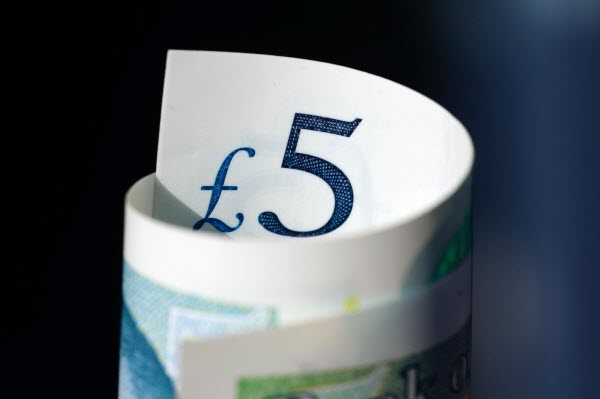
House prices in the UK take a nosedive hinting at depth of recession
dc.jpg


Whilst it certainly is true that house prices in the UK do not bear a direct relation to the capital markets or world of multi-asset electronic trading, it is most certainly a point of interest that when house prices move up or down, it is an indicator of the confidence in, and security of the domestic economy.

Britain is a home-owning nation. The phrase 'An Englishman's home is his castle' has been very appropriate for many generations and more than just a home, many residents in the United Kingdom see their home as a solid investment which should appreciate steadily over time.

Therefore, when house prices actually decrease, especially by some significant amount, such a decrease can be used as a measure of the weakening condition of the overall economy, which in turn may affect currency and stock markets.

The decreasing value of the British Pound against Western major currencies during the course of mid-2022 until very recently has been a case in point.

Just a few days after the shortest tenure for any Prime Minister in British history was held by Liz Truss for just 44 days, replacement Prime Minister Rishi Sunak took office and the new Chancellor of the Exchequer reversed Ms. Truss and former chancellor Kwasi Kwarteng's budget, with some commentators having even ventured their opinion that had it not been reversed, severe fiscal damage may have been done to the British economy.

Now, as the economy continues to flounder, house prices are at their lowest point since February 2021, this time caused by the increasing cost of borrowing money from banks in the form of mortgages, and the removal of a series of mortgage products from the market by no less than 10 British banks.

Those with mortgages are set for in some cases substantial increases in monthly payments as the interest rates continue to rise, with an expectation of 5 to 6% being reached by January 2023.

Average house prices slid 0.4 per cent between September and October, the most they have fallen since February 2021 and following a 0.1 per cent decline in September according to data from Halifax, one of the UK's largest mortgage lenders.

In February 2021, house prices were at a low point after a brutal period of lockdowns during which many people found their place of employment closed by the government, and payment holidays were commonplace as were fears of unaffordability of monthly commitments.

During the middle of 2021, the British government canceled stamp duty (property purchase tax) for buyers of properties under a certain value, which boosted the market and prices of lower valued properties increased tremendously, largely bolstered by 'buy-to=let' landlords picking up properties with no purchase tax.

That has long since ended, and now with the economy in a sustained state of recession, house prices are once again an indicator of the overall health of the fiscal position in the United Kingdom.

VIEW FULL ANALYSIS VISIT - FXOpen Blog...

Disclaimer: CFDs are complex instruments and come with a high risk of losing your money.

 
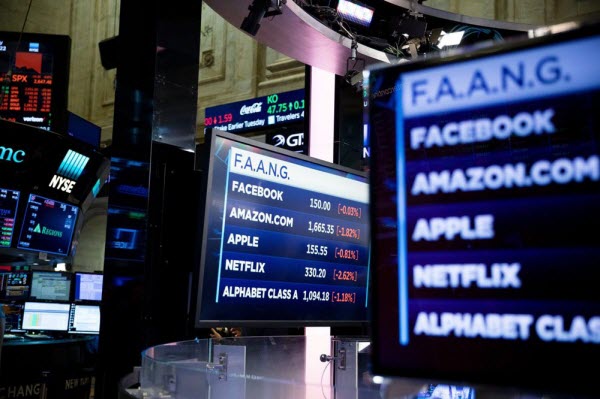
US Tech stocks under scrutiny as layoffs make presence felt
tech-stocks.jpg


During the course of last year, the previously very steady 'big tech' stocks became very volatile.

Big tech - a term often used to describe large-cap, publicly listed technology giants with their origins in Silicon Valley such as Meta, Alphabet (Google), Twitter, Tesla, Netflix and Amazon - is an area of the US stock market indices which has over recent years attracted steady, conservative investment due to overall lack of sudden movements.

The past 12 months have turned that on its head, and there have been times at which the Dow Jones and S&P500 indices, along with the overall performance of the two major New York-based stock exchanges, NYSE and NASDAQ having been affected noticeably by larger moves than had previously been the case.

One of the reasons for the sudden volatility had been the need for US tech firms to have to pay their suppliers and employees in different countries more, due to inflation and the depreciation of certain currencies against the US Dollar, however there had been a few more reasons and some of them are down to internal corporate policy. For example, Elon Musk's recent attempts to purchase Twitter have been surrounded by speculation that he may fire a substantial proportion of the existing workforce.

Overall, however, the staff redundancies in the big tech sector have not been limited to high profile speculation about Elon Musk's plans at Twitter. They have been far more widespread than this, as depicted by last week's employment figures released by the US Government.

Whilst some 261,000 new jobs were filled in the United States in October, blowing away analyst expectations of 200,000, the tech sector has been slowing down recruitment, and in some cases laying off existing staff.

Amazon, Apple and Facebook (Meta) have all announced hiring freezes, and in some cases are making redundancies.

Californian ride-sharing app developer Lyft is about to lay off 13% of its staff, and among the bigshots, Facebook is looking at reducing its workforce at subsidiaries WhatsApp and Instagram.

On a Year on Year basis, Amazon stock is down over 40% and Apple stock is down 25%, partly caused by production delays of its new iPhone 14 which is produced in China and has been subject to factory closures due to the Chinese government's draconian lockdowns which are still in force.

If the sensationalist news is to be believed, Twitter would look to lay off half of its entire payroll under Elon Musk's leadership.

Interestingly, despite the clear downturn in tech company revenues and their intention to reduce headcount compared to the 'low tech' American industries actually hiring more than expected in October, the S&P500 is actually up to 3,800 today compared to yesterday's low point of less than 3,700 which represented a five-day low.

The NASDAQ composite index is up a little too, at 10,560 over yesterday's 10,294 but today's increases still do not take it back to the high points at the beginning of last week.

It appears as though these possible layoffs are currently lingering in the background and until they have actually taken place, corporate performance is still being taken at face value.

What this does show, however, is that tech stocks are still quite steady and not so easily affected by news and are more affected by actions from within the firms themselves.

VIEW FULL ANALYSIS VISIT - FXOpen Blog...

Disclaimer: CFDs are complex instruments and come with a high risk of losing your money.
 
Oil Prices Are Back at Pre-Conflict Levels. Analysts Are Divided
EN-0207.png


At the start of May, oil markets were still pricing in elevated geopolitical risk and expectations of sustained supply disruption.

But easing tensions between Washington and Tehran, along with improving supply expectations, have rapidly shifted sentiment back toward fundamentals.

Brent crude has fallen back to around $71–74 per barrel
Prices are now close to pre-conflict levels after a drop of more than 35% since early May
The market is reassessing whether the geopolitical risk premium has been fully removed

The debate is now split between two clear narratives.

Bearish case: supply is recovering and demand remains uneven
Bullish case: geopolitical risks in the Strait of Hormuz are still not fully priced in

The key question for markets is whether oil has already priced in good news — or whether volatility is simply paused, not gone.

Gain insights to strengthen your trading knowledge.

TO VIEW THE FULL ANALYSIS, VISIT FXOPEN BLOG

Disclaimer: This article represents the opinion of the Companies operating under the FXOpen brand only (excluding FXOpen EU). It is not to be construed as an offer, solicitation, or recommendation with respect to products and services provided by the Companies operating under the FXOpen brand, nor is it to be considered financial advice.
 
S&P 500: Index Narrows Its Range as the Labour Market Cools
spx.jpg


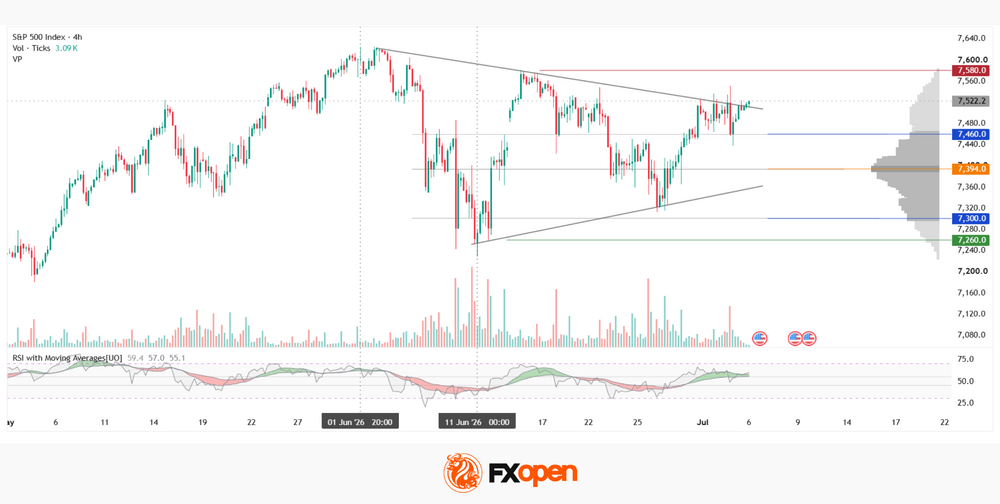
The broad US market index, the S&P 500, has entered July against a backdrop of mixed signals from the labour market. The Bureau of Labor Statistics report released on 2 July showed that just 57,000 jobs were added in June, well below market expectations, while the unemployment rate stood at 4.2%. Following the release, markets scaled back expectations of a Federal Reserve rate hike in September, although the possibility of an October increase remains. At the same time, the current 10% global tariff is due to expire at the end of July, and markets are gradually pricing in uncertainty surrounding future trade policy decisions.

spx.png


TO VIEW THE FULL ANALYSIS, VISIT FXOPEN BLOG

Disclaimer: This article represents the opinion of the Companies operating under the FXOpen brand only (excluding FXOpen EU). It is not to be construed as an offer, solicitation, or recommendation with respect to products and services provided by the Companies operating under the FXOpen brand, nor is it to be considered financial advice.
 
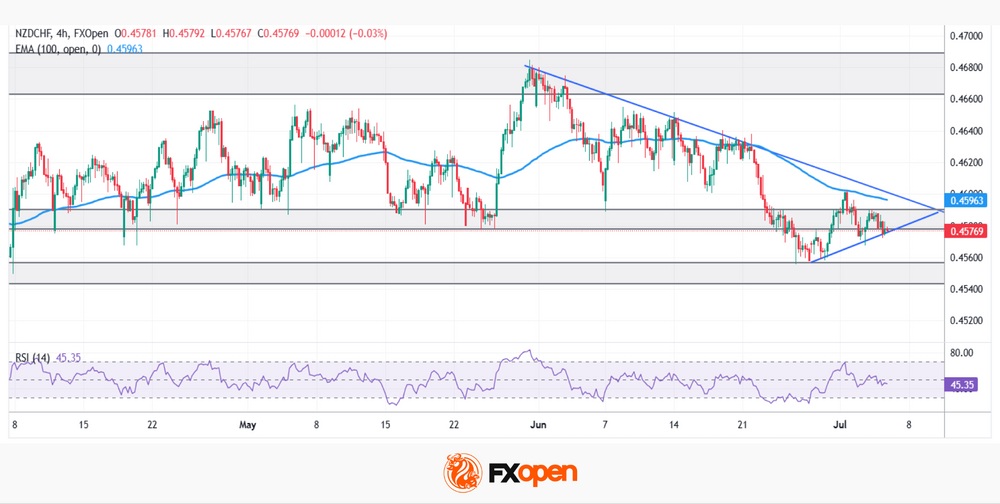
NZD/CHF Analysis: Which Currency Breaks the Consolidation First?
nzzdusd.png


NZD/CHF remains locked in a tight range as traders await the next monetary policy catalyst.

The Reserve Bank of New Zealand heads into Wednesday's meeting on shaky ground. After May's 3-3 split was resolved by a casting vote, the committee still lifted its rate path sharply, eyeing a 3.28% terminal rate by 2029. But the oil slide following the US-Iran truce has cut hike odds from over 80% to around 66-70%, splitting major banks between a hold and a further move.

Meanwhile, the Swiss National Bank holds firm at 0% for a fourth straight meeting. Switzerland's challenge mirrors New Zealand's in reverse: subdued inflation rather than overheating, leaving little room—or need—for tightening. The franc's strength stems more from so-called safe-haven flows than rate differentials.

The result: NZDCHF caught between short-term RBNZ uncertainty and near-static Swiss policy, with direction hinging on Wednesday's decision.

nzzdusd.jpg


TO VIEW THE FULL ANALYSIS, VISIT FXOPEN BLOG

Disclaimer: This article represents the opinion of the Companies operating under the FXOpen brand only (excluding FXOpen EU). It is not to be construed as an offer, solicitation, or recommendation with respect to products and services provided by the Companies operating under the FXOpen brand, nor is it to be considered financial advice.
 
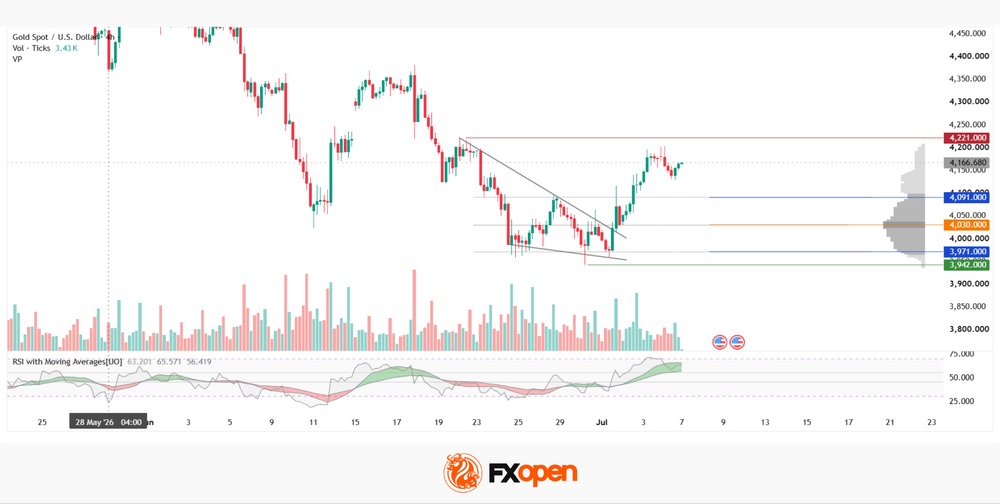
Gold Resumes Its Advance Following the US Labour Market Report
gold.png


Gold is attempting to break its medium-term trend, with the latest US labour market data acting as the main catalyst. The US employment report released on 2 July came in noticeably weaker than expected, with the pace of hiring slowing to its lowest level in several months. This may have dampened expectations of a near-term Federal Reserve rate hike, while the minutes of the Fed's June meeting, due to be released on 8 July, could provide further insight into how long this pause in the central bank's rhetoric is likely to last. For now, markets are pricing in a more dovish scenario, supporting safe-haven assets such as gold.

gold.jpg


TO VIEW THE FULL ANALYSIS, VISIT FXOPEN BLOG

Disclaimer: This article represents the opinion of the Companies operating under the FXOpen brand only (excluding FXOpen EU). It is not to be construed as an offer, solicitation, or recommendation with respect to products and services provided by the Companies operating under the FXOpen brand, nor is it to be considered financial advice.
 
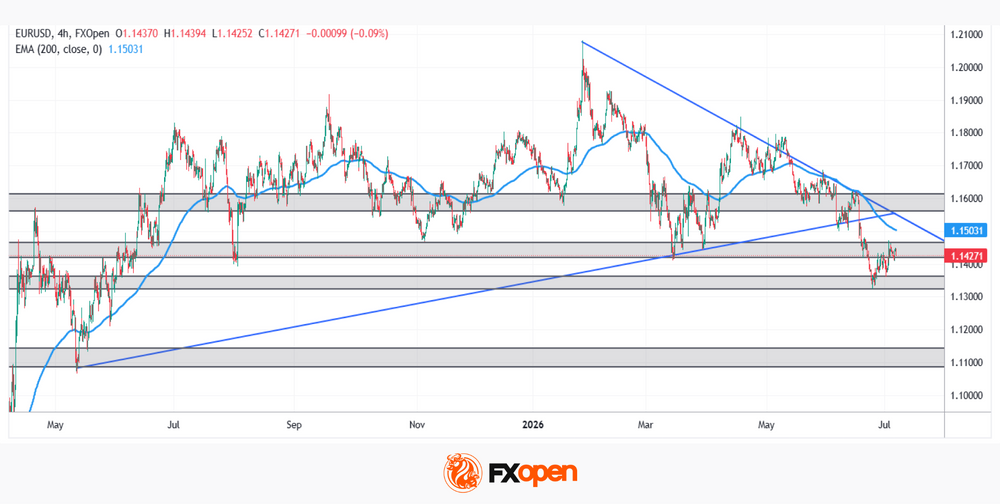
EUR/USD Analysis: Who Is in Control?
eurusd.jpg


Two central banks, two hawkish tones — but only one dollar just took a hit. The ECB delivered a 25bp hike in June, its first since 2023, lifting the deposit rate to 2.25% as Middle East-driven energy costs pushed headline inflation to 3.2% in May before easing to 2.8% in June, with growth downgraded to 0.8% amid weaker confidence.

The Fed, under new Chair Kevin Warsh, held rates at 3.50%-3.75% for a fourth straight meeting, with a hawkish dot-plot shift initially fueling hike expectations. However, the June employment report—released on July 3rd—showed nonfarm payrolls rising by just 57K against 110K expected, the weakest reading in four months, while the unemployment rate dipped to 4.2% only due to a labor force participation rate falling to 61.5%, its lowest level in five years.

The result: both central banks' communications currently lean hawkish, but with the Fed's data now sending mixed signals. Which side ultimately prevails could well set the tone for EUR/USD's trend into year-end.

eurusd.png


TO VIEW THE FULL ANALYSIS, VISIT FXOPEN BLOG

Disclaimer: This article represents the opinion of the Companies operating under the FXOpen brand only (excluding FXOpen EU). It is not to be construed as an offer, solicitation, or recommendation with respect to products and services provided by the Companies operating under the FXOpen brand, nor is it to be considered financial advice.
 
DAX 40: Can the Index Print Fresh Record Highs Once Again?

dax.jpg

The DAX 40 has shed more than 2% over the past several sessions, breaking a rally that had pushed the index to record highs on the back of Germany's fiscal pivot toward defence, infrastructure and climate spending. The pullback raises a legitimate question: is this a healthy pause within an intact uptrend, or the start of a deeper correction?

On the macro front, the picture remains mixed but constructive. German durable goods orders surprised meaningfully to the upside, hinting that domestic industry may finally be turning a corner. That said, a portion of this year's projected GDP growth stems from calendar effects rather than genuine demand recovery.

Monetary policy offers the clearest explanation for the recent weakness. The ECB delivered its first hike since 2023 in June, and the shift in tone alone unsettled rate-sensitive DAX sectors like Financials and real estate, while a firmer euro added pressure on export-driven industrials.

dax.png


TO VIEW THE FULL ANALYSIS, VISIT FXOPEN BLOG

Disclaimer: This article represents the opinion of the Companies operating under the FXOpen brand only (excluding FXOpen EU). It is not to be construed as an offer, solicitation, or recommendation with respect to products and services provided by the Companies operating under the FXOpen brand, nor is it to be considered financial advice.
 
US Dollar Consolidates Ahead of FOMC Minutes Release
usd.jpg


The US dollar has entered a period of consolidation following last week's sharp price swings, as market participants turn their attention to the release of the Federal Reserve's latest meeting minutes. Investors are looking for additional guidance on the future path of interest rates and whether support for a hawkish monetary policy stance remains widespread within the Fed.

Further uncertainty was created by last week's mixed US labour market data, which raised concerns about the resilience of the US economy but did not trigger a significant reassessment of Federal Reserve policy expectations. Attention has now shifted to the FOMC minutes, with traders focusing on the Fed's assessment of inflation risks and its outlook for future interest rate decisions. Confirmation of a hawkish stance could provide fresh support for the US dollar, while a more cautious assessment of economic conditions may strengthen expectations of future policy easing.
usd.png


TO VIEW THE FULL ANALYSIS, VISIT FXOPEN BLOG

Disclaimer: This article represents the opinion of the Companies operating under the FXOpen brand only (excluding FXOpen EU). It is not to be construed as an offer, solicitation, or recommendation with respect to products and services provided by the Companies operating under the FXOpen brand, nor is it to be considered financial advice.
 
Netflix: Attempting to Break the Short-Term Downtrend
Dhytfnsn_o.png


Netflix is preparing to release its financial results for the second quarter of 2026. According to the company's official press release published on 15 June, the earnings report will be released on 16 July, followed by a video interview with management for investors. Back in April, when reporting its first-quarter results, the company warned that content spending would likely peak during the second quarter before moderating in the second half of the year. Investors are now looking to the July earnings release as the first opportunity to assess that forecast, as well as the pace of subscriber and advertising revenue growth.

hyw2UpAg_o.jpg


TO VIEW THE FULL ANALYSIS, VISIT FXOPEN BLOG

Disclaimer: This article represents the opinion of the Companies operating under the FXOpen brand only (excluding FXOpen EU). It is not to be construed as an offer, solicitation, or recommendation with respect to products and services provided by the Companies operating under the FXOpen brand, nor is it to be considered financial advice.
 
European Currencies Seek Stability Amid Rising Geopolitical Tensions
sflQw6BF_o.png


European currencies are showing mixed performance as they attempt to stabilise following their recent decline and the release of the Federal Reserve's latest meeting minutes. The minutes revealed growing concern over persistent inflationary pressures, with several policymakers supporting the possibility of an immediate interest rate increase, while the majority maintained a more cautious approach to further monetary tightening. Overall, the document highlighted ongoing divisions within the Fed over the future path of interest rates but maintained a broadly hawkish backdrop for the US dollar, as further rate hikes have not been ruled out should inflation remain elevated.

Fresh uncertainty has also emerged from renewed tensions in the Middle East. Following the latest escalation between the United States and Iran, investors have once again shifted their focus to the risk of a broader regional conflict and the potential disruption of energy supplies through key shipping routes. Rising geopolitical tensions continue to support demand for safe-haven assets while increasing concerns that higher energy prices could fuel another wave of inflation, further complicating the Federal Reserve's prospects for policy easing. Against this backdrop, European currencies are attempting to stabilise, although persistent uncertainty continues to limit the scope for a sustained recovery.

QoAADerK_o.jpg


TO VIEW THE FULL ANALYSIS, VISIT FXOPEN BLOG

Disclaimer: This article represents the opinion of the Companies operating under the FXOpen brand only (excluding FXOpen EU). It is not to be construed as an offer, solicitation, or recommendation with respect to products and services provided by the Companies operating under the FXOpen brand, nor is it to be considered financial advice.
 
Australian Dollar Holds Above the Current Market Profile
0cIvHvpP_o.png


The minutes from the Reserve Bank of Australia's (RBA) June meeting, released on 30 June, suggested that policymakers are not yet ready to rule out further policy tightening. Board members noted persistent excess demand and broad-based inflationary pressures across the economy, leaving the door open for another interest rate increase if required. Against this backdrop, the interest rate differential between Australia and the United States continues to support the Australian dollar, particularly as markets have scaled back expectations for further tightening by the Fed in the coming months. This combination of a relatively hawkish RBA and a more cautious Fed has helped underpin demand for the Australian dollar, although further macroeconomic data from both economies will likely be needed to reinforce this trend.

f2ER3b4v_o.jpeg


TO VIEW THE FULL ANALYSIS, VISIT FXOPEN BLOG

Disclaimer: This article represents the opinion of the Companies operating under the FXOpen brand only (excluding FXOpen EU). It is not to be construed as an offer, solicitation, or recommendation with respect to products and services provided by the Companies operating under the FXOpen brand, nor is it to be considered financial advice.
 
GBP/AUD Analysis: The Tug-of-War Begins
GCGalny4_o.png


Oil is back in the driver's seat, and both the pound and the aussie are feeling its grip. The Bank of England held rates at 3.75% in June, but with UK inflation at 2.8% and crude oil climbing on renewed Middle East tensions, markets now lean towards a hike before year-end. Down under, the Reserve Bank of Australia held its cash rate at 4.35% after three straight increases, with core inflation stuck at 3.6%, keeping the door open for further tightening. Two hawkish central banks, one shared inflationary culprit—yet it's the existing 60-basis-point rate gap in Australia's favour that is giving GBP/AUD its current shape, with the pair holding firm near the 1.93 handle as traders watch which bank blinks first.

dDe7cBAy_o.jpeg


TO VIEW THE FULL ANALYSIS, VISIT FXOPEN BLOG

Disclaimer: This article represents the opinion of the Companies operating under the FXOpen brand only (excluding FXOpen EU). It is not to be construed as an offer, solicitation, or recommendation with respect to products and services provided by the Companies operating under the FXOpen brand, nor is it to be considered financial advice.
 
Top