The Value of the Yuan is Inextricably Tied to that of the US Dollar
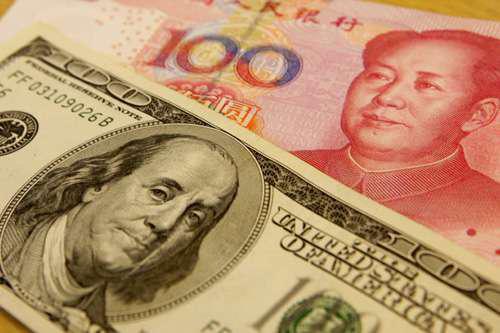 The 2% devaluation of the Chinese yuan has been covered ad nauseam by the financial press. That the Chinese government and the People’s Bank of China decided to intervene in the currency market is nothing new. The devaluation is an attempt to boost economic activity vis-à-vis cheaper exports from China. With a weaker CNY, Chinese exports become that much more competitive on global markets and China can begin to reverse its flailing GDP and export numbers. That is the theory behind this well-calculated manoeuvre. The Chinese government moved quickly to calm markets about the extent and the scope of the currency devaluation: it was to be a once-off activity and the yuan would be stabilized at a lower valuation against other currencies. Three slides ensued and then stability returned to markets.
Since the Chinese currency is not allowed to find its own equilibrium level in markets, it moves in accordance with the greenback. The intentional depreciation of the yuan will make Chinese exports highly competitive once again, especially since the USD has been gaining ground in recent years. Dollar strength is a hindrance to cheap export prices from China. The 8.3% decline in exports for July was directly attributed to slack global demand. The currency depreciation will spur export activity moving forward. But there are others who are less convinced about the long-term implications of the yuan devaluation. For them, the move has presaged a foreboding storm that is likely to wreak havoc on the financial markets.
Why the Yuan Depreciation Matters to Everyone
From the outset it should be pointed out that the yuan devaluation made the currency only marginally weaker against the greenback – to the tune of 3%. This pales in comparison to other devaluations of major world currencies (recall the 1967 GBP devaluation which saw a 16% decline in value). But for China, this is the biggest devaluation in 2 decades and since China is the world’s second largest economy, it matters in a big way. If we are to question the numbers, 7% GDP growth may in fact be overstating the country’s growth rate. The property bubble in China is a source of concern but so are the weak export numbers. Chinese economic weakness is a concern to European countries like Britain who export huge amounts to China.
We cannot escape the reality that Chinese prices are rising. Higher wages and a burgeoning middle class means that the rest of the world will soon start paying more for Chinese products. And these products encompass everything from consumer durables to electronics, to clothing and textiles and beyond. Disinflation is bound to ensue as a result of the initial price cuts in Chinese and other Asian exports. With Europe and the world battling deflationary pressures – this is going to be a problem. Steadily decreasing prices will continue with lower Crude oil prices, as is evident from a decline in China’s insatiable appetite for Crude oil. And with cheaper imports into the US, the UK and the EU, rate hikes from these countries seem unlikely since overall economic activity will slow. In order to justify a rate hike, inflation must be on the rise (approaching 2% for the US and the UK), but cheaper imports from China will lead to falling prices.
Commodities Prices and Currency Concerns
Commodities are priced in dollars. When the dollar strengthens, the price of commodities ‘rises’ for countries whose currencies have weakened relative to the dollar. We now have a situation where emerging market economies (primary producers of agricultural and mining commodities) have to endure weak global demand with declining imports from China and a strong USD which dampens overall commodities demand. This has set in motion a negative spiral for the mining and energy sectors in emerging market economies. The implications of declining demand have impacted directly on global bourses which are heavily weighted in favour of mining and energy companies. And what we are seeing is incredible pressure coming to bear on the currencies of emerging market economies. This is likely to heighten when rate hikes come into play. The clock is ticking…
Author’s Bio: Brett Chatz is a graduate of the University of South Africa, and holds a Bachelor of Commerce degree, with Economics and Strategic management as his major subjects. Nowadays Brett contributes from his vast expertise for the globally renowned spread betting and CFD trading company – Intertrader.
Speak Your Mind