
Ho to Trade Bryce Gilmore’s Graphic Patterns
Author: Andrey Goilov

Dear Clients and Partners,
Nowadays, there are plenty of various graphic patterns for trading. Some are classical, some are modernized. Every trader tries to supplement graphic patterns with their own secret features to make them more efficient.
For example, previously, investors used to trade the Head and Shoulders pattern at the breakaway of the “neck” only; however, these days, many traders do not wait for the pattern to be complete but trade while it is still forming. Thus, they can enter the market with a much shorter Stop Loss.
Bryce Gilmore is one of the traders who added their rules to and found interesting mechanisms in the work of classic trading patterns. Many patterns from his books coincide with the views of other graphic traders.
On the one hand, there is nothing complicated to his novelties; on the other hand, one has to spend a lot of time to come to such conclusions on their own. However, with all the books and articles, a beginner only needs to read and reread them thoroughly and apply the knowledge to the current market.
All Bryce Gilmore’s patterns can be conditionally divided into two groups (like all other graphic patterns): those of trend continuation and those of trend reversal. In this article, we will discuss the main price structures only. The author has plenty of patterns in store but you do not need to know all of them to trade successfully: you can choose a couple and learn how to use them properly in compliance with your capital management rules.
Trend reversal patterns
The Head and Shoulders pattern
Bryce Gilmore insists on calling this pattern like this, and we cannot deny that it is very similar to the classical pattern.
However, here, there is a large difference between the classical and original approaches. In normal tech analysis, few traders speak about selling from exactly the right “shoulder” of the pattern. As for Gilmore, he notes that if the “shoulders” are more or less equal, we can open a selling or buying position depending on where the pattern is aimed.
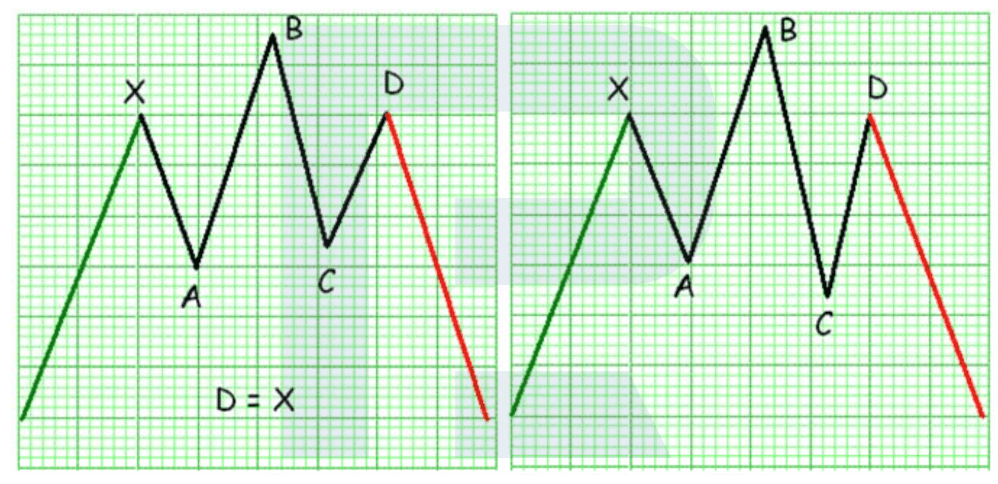
Moreover, he neglects the slope of the “neck” completely: even if the line is heading down, we can still open a buying position provided that the “shoulders” are equal.
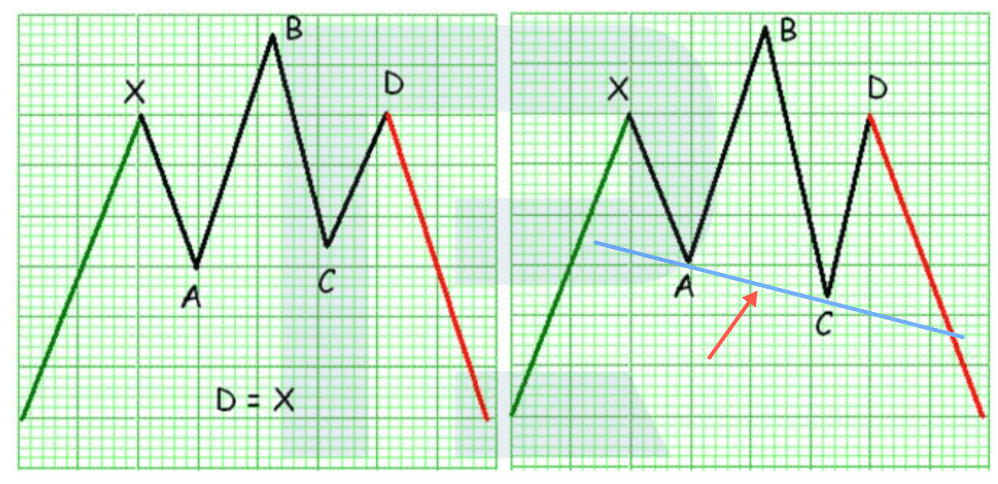
I will remind you that in classical tech analysis, the “neck” must be aimed in the direction of the previous trend. If otherwise, the pattern is not a Head and Shoulders but a Wolfe’s Wave. Some time ago, my colleagues and I singled out this feature and were quite surprised to find a similar idea in the book of another author.
Read more at R Blog - RoboForex
Sincerely,
RoboForex team
Author: Andrey Goilov
Dear Clients and Partners,
Nowadays, there are plenty of various graphic patterns for trading. Some are classical, some are modernized. Every trader tries to supplement graphic patterns with their own secret features to make them more efficient.
For example, previously, investors used to trade the Head and Shoulders pattern at the breakaway of the “neck” only; however, these days, many traders do not wait for the pattern to be complete but trade while it is still forming. Thus, they can enter the market with a much shorter Stop Loss.
Bryce Gilmore is one of the traders who added their rules to and found interesting mechanisms in the work of classic trading patterns. Many patterns from his books coincide with the views of other graphic traders.
On the one hand, there is nothing complicated to his novelties; on the other hand, one has to spend a lot of time to come to such conclusions on their own. However, with all the books and articles, a beginner only needs to read and reread them thoroughly and apply the knowledge to the current market.
All Bryce Gilmore’s patterns can be conditionally divided into two groups (like all other graphic patterns): those of trend continuation and those of trend reversal. In this article, we will discuss the main price structures only. The author has plenty of patterns in store but you do not need to know all of them to trade successfully: you can choose a couple and learn how to use them properly in compliance with your capital management rules.
Trend reversal patterns
The Head and Shoulders pattern
Bryce Gilmore insists on calling this pattern like this, and we cannot deny that it is very similar to the classical pattern.
However, here, there is a large difference between the classical and original approaches. In normal tech analysis, few traders speak about selling from exactly the right “shoulder” of the pattern. As for Gilmore, he notes that if the “shoulders” are more or less equal, we can open a selling or buying position depending on where the pattern is aimed.
Moreover, he neglects the slope of the “neck” completely: even if the line is heading down, we can still open a buying position provided that the “shoulders” are equal.
I will remind you that in classical tech analysis, the “neck” must be aimed in the direction of the previous trend. If otherwise, the pattern is not a Head and Shoulders but a Wolfe’s Wave. Some time ago, my colleagues and I singled out this feature and were quite surprised to find a similar idea in the book of another author.
Read more at R Blog - RoboForex
Sincerely,
RoboForex team