• The Forex, Binary Options Forum - welcomes you to our Community!

    DigitalCashPalace Forum is dedicated to discussions about Forex, Binary Options, commodities, stocks related.

    Please take a look around, and feel free to .

Quppy.com - cryptocurrency wallet, exchange service, bank.


The Crypto "Wild West" Ends Here.

Let’s be honest: the crypto industry can feel like the Wild West. Frozen accounts, sudden blocks, and vague terms are unfortunately common.

At Quppy, we took a different path. We are a fully licensed European platform. What does that actually mean for you? It means we don't play games with your money.

Compliance: We operate under strict EU regulations.

Security: Your funds are legally protected and separated from company assets.

Reliability: We are here for the long run, not just for the hype cycle.

We handle the complex legal work so you can manage your crypto and fiat with total peace of mind. Choose a partner, not just an app.

Manage your funds securely today: quppy.com


Access European Banking in 4 New Countries.

We are expanding the map. Getting a foothold in the Eurozone financial system just got easier.

Quppy now fully supports incoming and outgoing Euro transfers for:

- Moldova

- North Macedonia

- Albania

- Montenegro

Whether you are a freelancer receiving a salary, a business paying partners, or just sending money home — you can now move Euros freely between these regions and the rest of Europe.

One IBAN for everything. No detours. Just a straight path to European banking rails.

Send and Receive EUR instantly: quppy.com


Locked out of your own USDT? The "Insufficient funds" trap.

It’s the classic rookie mistake. You set up your first wallet, receive stablecoins, and immediately hit an error when trying to make a payment. You have the money, but the transaction just won't go through.

Your wallet is your starting door to the digital economy, but opening it isn't free. The network charges a toll (gas) for every single action you take.

The catch:

This toll is strictly paid in ETH.

You cannot use your stablecoins to cover the network fee.

Zero ETH on your balance = your tokens are stuck.

The fix is simple: Always fund a new wallet with a little bit of ETH before receiving any other tokens. Treat it as the fuel for your wallet's engine.

Keep your assets moving without the technical headaches.

Manage your funds securely: quppy.com


How crypto-to-fiat actually works without the friction

If you've ever tried converting crypto into something you can spend at a grocery store, you know the usual drill: move funds to an exchange, sell, wait for withdrawal, transfer to your bank, wait again. Two to five business days if you're lucky.

We built Quppy specifically to compress that pipeline into one step. The core of it is a European IBAN account connected directly to your crypto holdings. Here's what that means in practice:

  • You hold BTC, ETH, USDT, or other supported assets in the app
  • When you need euros, you swap crypto to fiat internally — no external exchange needed
  • The euros land in your IBAN, which supports SEPA and SEPA Instant transfers
  • You can also top up via any bank card at 0% fee (minimum €5)

SEPA Instant settles in under 10 seconds, 24/7 — including weekends and holidays. That's not a marketing claim, that's how the SEPA Instant protocol works, and Quppy supports it natively.

The whole setup runs under EU VASP licensing (Digital Lamp sp. z o.o., Poland) and MiCA compliance. KYC takes about 5 minutes in the app.

For those of you managing crypto portfolios and needing regular fiat off-ramps — this is essentially what Quppy was designed for. One app, both sides of the bridge.

quppy.com

Has anyone here tried combining IBAN accounts with crypto wallets in a single app? Curious how others handle the fiat conversion workflow.


What 0% card top-up fees actually mean for your capital

In our last update we covered how Quppy connects crypto holdings to a European IBAN. This time, let's talk about what happens before the crypto swap — getting fiat into your account in the first place.

Most platforms charge 2-3% on card deposits. That sounds small until you do the math: deposit €1,000 and you're already down €20-30 before you've done anything. Do that weekly, and you're losing over €1,000 a year just on deposits. That's not a fee — that's a tax on participation.

Quppy charges 0% on card top-ups. The minimum is €5, and there are no hidden markups, no "processing surcharges," no weekend premiums. What you send is what lands in your account.

Here's how it works in practice:

  • Link any Visa or Mastercard to your Quppy account
  • Top up your EUR or GBP IBAN — funds arrive instantly
  • No percentage cut, no flat fee, no currency conversion markup
  • Works 24/7, including holidays — same conditions regardless of timing

Once the fiat is in your IBAN, you can use it for SEPA transfers, convert to crypto internally, or just hold it. The point is: 100% of your capital is available from the moment it arrives.

For context — Quppy operates under EU VASP licensing (Digital Lamp sp. z o.o., Poland) with MiCA compliance. KYC takes about 5 minutes in the app.

quppy.com

For those of you who regularly move fiat in and out of crypto — what deposit fees are you currently paying? Curious whether 2-3% is still the norm or if the market is starting to shift.


Buying a dip: traditional platform vs. instant card top-up

Last week we talked about 0% card top-up fees. This week the market gave us a live example of why speed matters just as much as cost — BTC dropped from $71K to $66K in a few days.

The traditional route:
You see the dip. You initiate a bank transfer to your exchange. SEPA takes a few hours if you're lucky, a full business day if not. Wire transfer? 2-3 days. By the time your funds arrive, the price has already bounced. Some platforms offer card deposits to skip the wait, but charge 1.5-3% for the privilege. On a €1,000 deposit, that's €15-30 gone before you've bought anything.

The Quppy route:
Card top-up with any Visa or Mastercard. Funds land in your account instantly. 0% fee, minimum €5. Convert to BTC, ETH, USDT, or any other supported asset directly in the app. Total time from "I want to buy" to "I own it": under 2 minutes.

The difference isn't just convenience — it's whether you catch the price you actually wanted or the price you got stuck with.

quppy.com

For those who actively buy dips — what's your current funding speed? Are you still waiting on bank transfers or have you found faster routes?


Quppy is now live in 36 African countries — what this means and why it matters

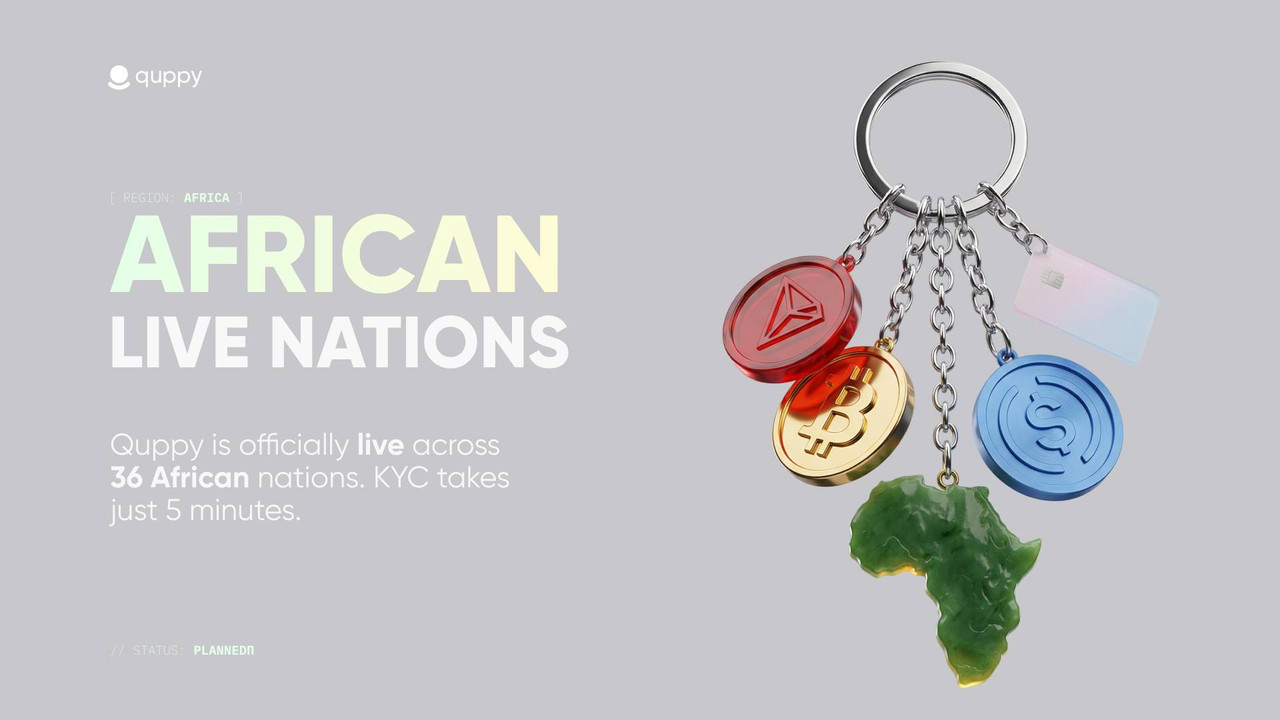
Quick update from our side: Quppy has officially expanded to Africa. 36 countries now have full access to the platform.

What's available
The full stack, same as EU users — no stripped-down "lite" version:

  • IBAN accounts in EUR and GBP
  • Crypto wallets — BTC, ETH, USDT, USDC, LTC, BCH, TRX
  • Instant card top-ups at 0% fee (Visa/Mastercard, minimum €5)
  • Card withdrawals to any Visa or Mastercard worldwide
  • Crypto-to-fiat exchange within the app

KYC takes about 5 minutes. Funding works via Visa card (instant) or SEPA transfer from any EU bank.

Why Africa, why now
Africa has some of the fastest-growing crypto adoption rates globally. Nigeria, Kenya, and South Africa consistently rank in the top 20 for P2P crypto volume. But most users in these markets face a specific gap: getting between crypto and traditional banking is either expensive, slow, or both. Having a European IBAN connected to crypto wallets in one app addresses that directly.

The covered countries include Morocco, Algeria, Tunisia, Egypt, Kenya, Nigeria, South Africa, Ghana, Tanzania, Ethiopia, and 26 more across the continent.

What this doesn't change
Same EU-licensed, MiCA-compliant infrastructure. Same security. The expansion is geographic, not architectural.

quppy.com

Anyone here based in or operating across African markets? Curious to hear what crypto-to-fiat tools you've been using and where the biggest gaps are.



Stablecoins just stopped being a crypto-native story

Over recent months the biggest names in traditional finance moved into stablecoins: Société Générale issued a euro stablecoin, JPMorgan extended JPM Coin onto public blockchains, and the US enacted the GENIUS Act to regulate dollar stablecoins. On this side of the Atlantic, the EU's MiCA framework already covers them.

What this actually means
Stablecoins are quietly becoming settlement rails, not a trading sideshow. For moving value across borders they beat the incumbents on the metrics that matter: they settle in minutes rather than the 1-3 days SWIFT often takes, cost a fraction of a wire, and run 24/7 including weekends and holidays.

Separate fact from read: the fact is that regulated banks are now issuing and holding stablecoins. The read is that once both the US and EU have a legal framework, payment firms and treasurers lose their main excuse not to use them. Regulatory clarity was the missing piece, and it's arriving.

One nuance worth flagging: a euro stablecoin and a dollar stablecoin aren't interchangeable. If your costs are in euros, settling in a USD-pegged coin quietly adds FX exposure. Match the currency of the coin to the currency of the flow.

Where Quppy sits: USDT and USDC are supported with instant conversion to EUR or GBP, under an EU license — so you can move dollar-stable value and land in euros without leaving the app.

quppy.com

Are you actually using stablecoins for payments yet, or still mainly as a place to park during trades?


$1.2B into Bitcoin ETFs in one week — and a top-5 US bank just launched a stablecoin fund

In a single recent week, roughly $1.2B flowed into spot Bitcoin ETFs, Morgan Stanley stood up a stablecoin reserve fund (a first among the top-5 US banks), and at least seven major economies now have stablecoin laws on the books.

What's driving it: institutions don't move on vibes. They move when custody, accounting, and regulation are solved. ETFs gave them a compliant wrapper for BTC exposure; stablecoin laws gave them a compliant way to hold and move tokenized cash. The infrastructure caught up to the demand, and the capital followed.

What it means for everyday users: the rails you may already be using — holding stablecoins, sending SEPA from a euro IBAN, topping up a card from BTC — are the same rails the banks are now building on. If you've been doing this for a while, none of this is news. The institutions are catching up to retail, not the other way around.

quppy.com

Are you seeing this in your own setup — have the day-to-day tools you use basically converged with what the banks are now announcing?
 
Last edited:


How to turn crypto into spendable cash on a card you already own

Crypto only has value if you can actually use it. The gap most people hit is the last mile — getting from a balance on screen to money you can spend at a checkout.

Steps:
1. In the app, pick the asset to cash out — BTC, ETH, USDT or USDC.
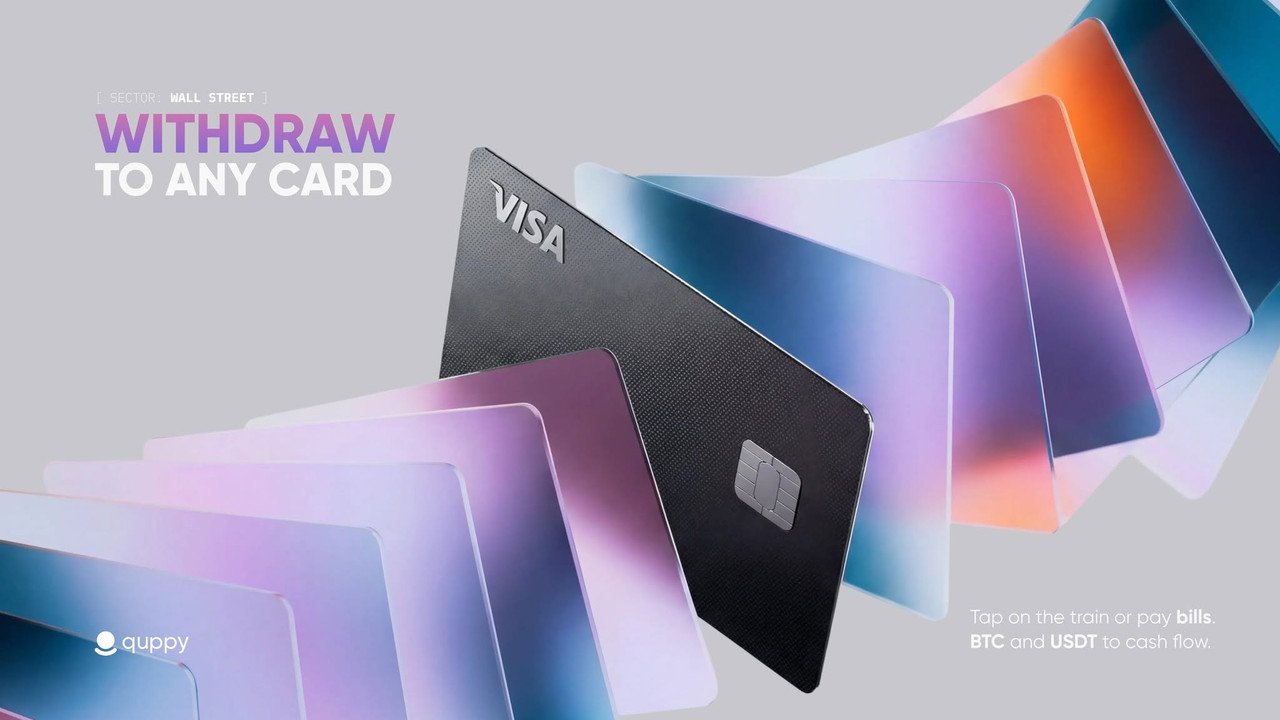
2. Withdraw it to your own Visa or Mastercard. Quppy converts and pushes the funds to the card you already carry.
3. Spend normally. The money lands on your existing bank card, so tap-to-pay, online checkout, splitting a bill, or pulling cash from an ATM all work the way they always have.

Tip: this is a withdrawal to your own card — not a Quppy-issued card. There's nothing new to activate or carry; you use the card that's already in your pocket.

What you end up with: no SWIFT delays, no multi-day wait for a bank transfer to clear. Crypto out, usable balance on your own card. Availability and limits depend on your card's region, so check those before a time-sensitive payment.

quppy.com

For those who cash out to a card — how's the timing been, near-instant or some lag?
 
702224375_1472468141560521_6912546220207219212_n.jpg

USD stablecoins or EUR stablecoins — which should you actually hold?

People tend to treat all stablecoins as interchangeable "digital dollars-ish." They're not, and picking the wrong one can quietly cost you on FX.

USD-pegged coins like USDT and USDC are the most liquid in the market and the default for anything priced in dollars or moving across borders. Euro-pegged coins like EURC and EURT are newer and MiCA-regulated, and they shine when your money lives in euros — you skip converting into dollars and back.

The trap worth naming: if you earn in EUR and park it in USDT, you've effectively bought dollars without deciding to. The FX risk doesn't vanish — it just shows up later when you swap back to euros, sometimes after the rate has moved against you.

So the rule of thumb is to match the stablecoin to the journey: dollar destination, hold dollars; euro flow, hold euros. Don't pay a spread by accident.

Quppy supports USDT and USDC with instant EUR/GBP conversion, so you can switch sides when the trip actually calls for it.

quppy.com

How do you handle this — hold both, or just convert per transaction?


Quppy is now live in five more SEPA markets

Following earlier notes here on euro IBANs and SEPA Instant, the reach just expanded.

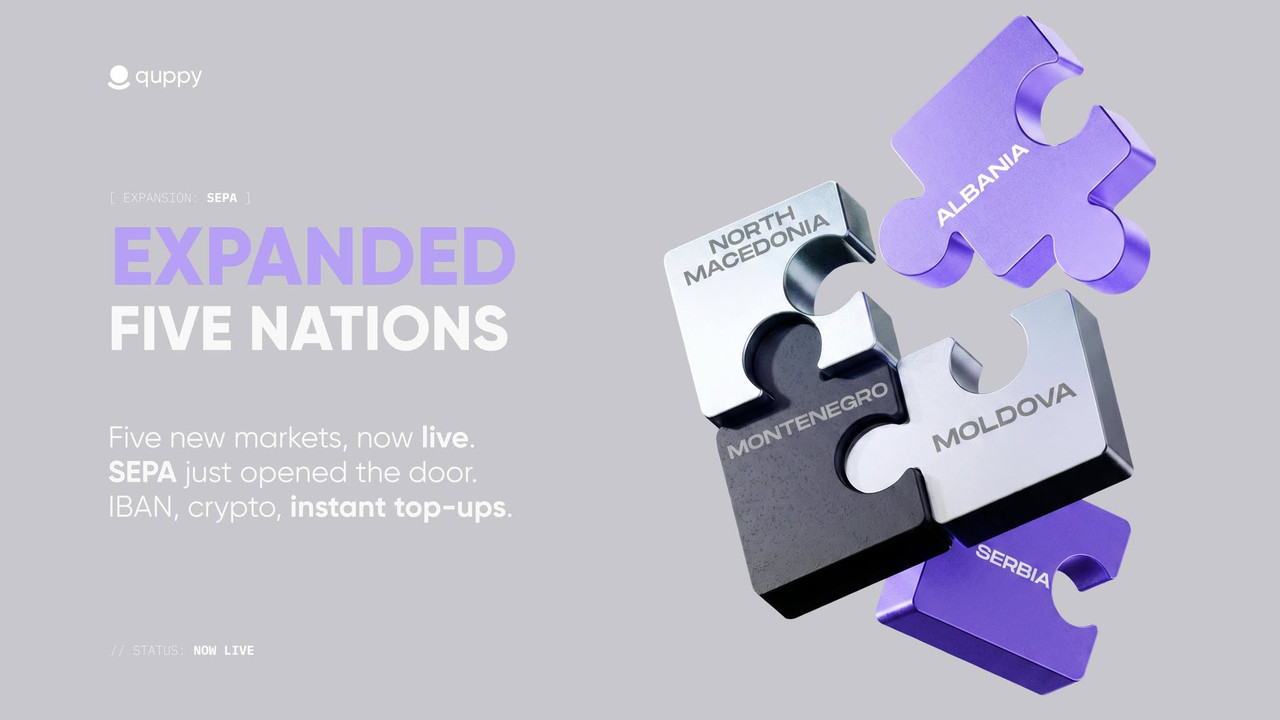
Quppy went live in five new markets — Albania, North Macedonia, Montenegro, Moldova and Serbia. What makes it matter isn't just "more countries": all five have joined SEPA. Euro transfers that used to take days and carry international-transfer pricing now move at domestic speed and domestic cost.

From day one in these markets you get the full feature set:
  • EUR and GBP IBAN accounts
  • SEPA and SEPA Instant transfers (Instant settles in seconds, 24/7)
  • Crypto wallets with instant exchange
  • 0% fee card top-ups, and withdrawals to your own card

Worth being precise about one thing: it's SEPA membership that unlocks the cheap, fast euro transfers — that's a payments-network change, not a Quppy-specific trick. What Quppy adds is making the whole stack (IBAN + crypto + exchange) available in those markets from launch, in one app.

quppy.com

Anyone here banking in the Western Balkans or Moldova — how's the SEPA rollout actually landing on the ground for you?
 
Top