
As for the forecast for the coming week, summarizing the opinions of a number of experts, as well as forecasts made on the basis of a variety of methods of technical and graphical analysis, we can say the following:
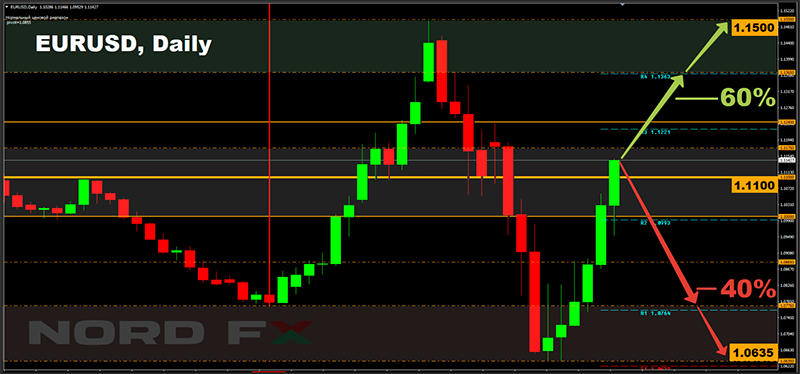
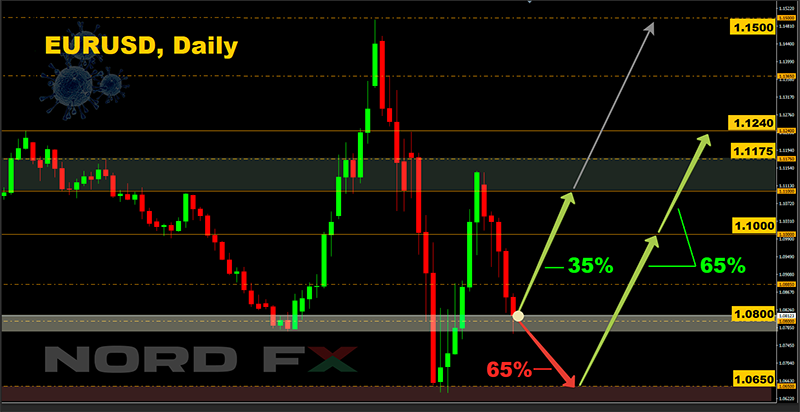
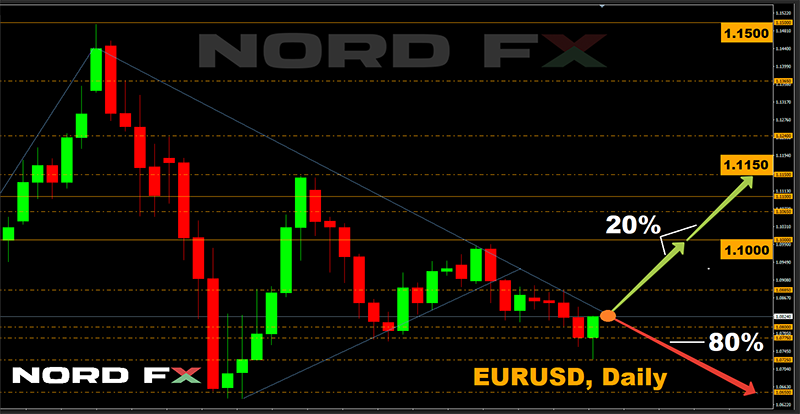
- EUR/USD. The struggle of governments and regulators for the economies of their countries continues. The ECB did not cut interest rates but announced a 60% increase in the quantitative easing (QE) program, which will amount to €120 billion in 2019. For its part, the US Federal reserve is flooding the market with cheap money, under pressure from President Trump who is eager to be re-elected for the second term. The US has launched a short-term lending program since last week, under which the Fed is ready to lend $1.42 trillion to banks every week. This has never happened in the history of the United States. This week, banks have already received the first tranche at 0.255% per annum. This suggests that, with a high probability, the rate on the dollar will be reduced by at least 0.50% at the Fed meeting next week.
This balance of power is not in favor of the dollar. However, a small margin (55%) is still on the side of bears among the experts, they are supported by 85% of oscillators and trend indicators on H4. The remaining 45% of analysts believe that the dollar will still lose its position, and the pair will again go north. This is agreed by 15% of oscillators on H4, which give signals about the pair being oversold.
Graphical analysis on H4 shows a sharp decline in the pair to the level of 1.0950, and then its growth first to the height of 1.1100, and then 100 points higher.
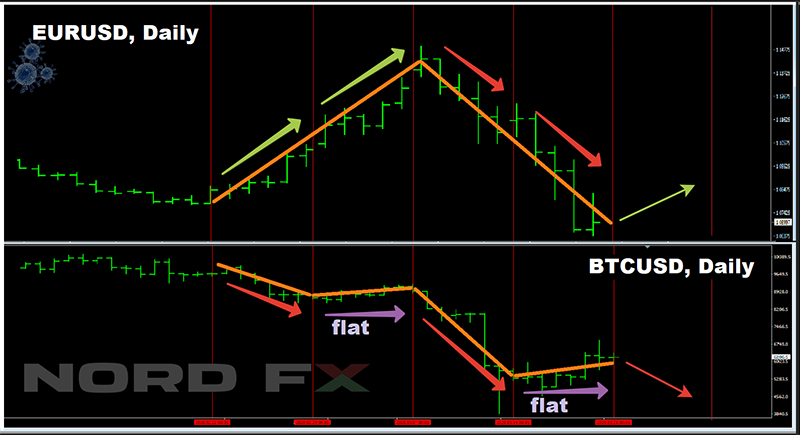
However, with the ongoing coronavirus panic, super-turbulence in the stock and currency markets, and surging oil prices, any forecasts can turn to dust in a second. And this is proved by the chaos that reigns in the indicator readings on D1, where the green, red and gray colors are mixed.
The main support zones are 1.1065, 1.1000, 1.0850 and the February low 1.0750. The resistance zones – 1.1175, 1.1240, 1.1350 and 1.1500;
- GBP/USD. It is clear that 100% of the trend indicators at the end of the weekly session are looking down. However, the situation is somewhat different among oscillators – 20% of them on the H4 timeframe and 15% on D1 are already in the oversold zone, which indicates an imminent correction or reversal of the trend up. Graphical analysis on D1 supports this development as well. According to its readings, the pair can reach the bottom near the October 2019 low of 1.2200, and then turn around and go north – first to the resistance of 1.2425, and then to the height of 1.2565. At the same time, given the range of fluctuations in recent weeks, it makes sense to designate two more support levels – 1.2065 and 1.1960, and two resistance levels – 1.2725 and 1.2870. Although, perhaps, this is not the limit.
As for the opinions of experts, it was not possible to form one for the upcoming week. But in the forecast for the next 1-2 months, the number of supporters of the pair's growth is a clear majority-75%, the goal is to rise to the level of 1.2900-1.3100;
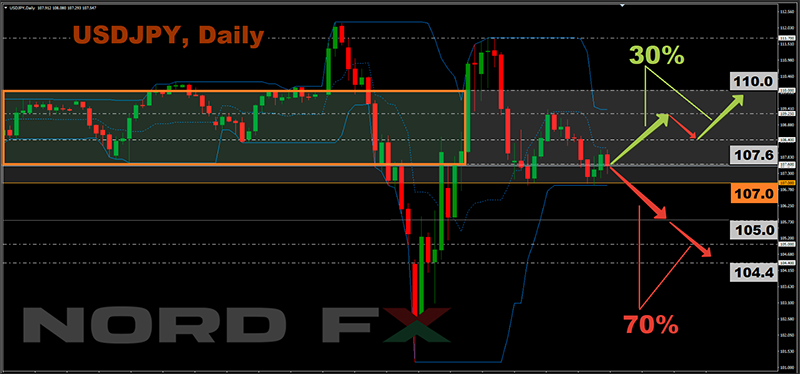
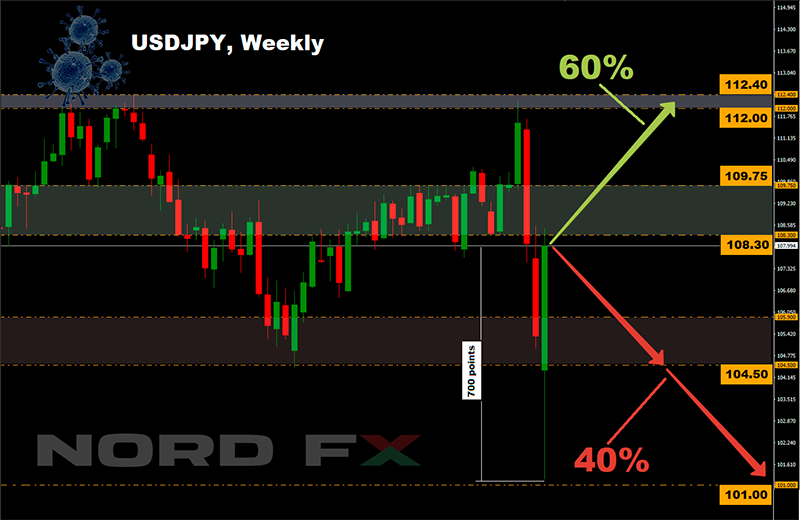
- USD/JPY. If in the medium-term forecast for GBP/USD, most analysts voted for the growth of the pound and the fall of the dollar, the situation is the opposite with respect to the yen. Here, 60-70% of experts believe that in the next 1-2 months, the Japanese currency will lose its position, the pair will pass through the 108.30-109.75 zone like a knife through butter and reach the 112.00-112.40 level. The next target for the bulls is 200 points higher.
Note that in the coming week, in addition to the US Federal Reserve's decision on the interest rate, we are waiting for similar decisions by the Bank of Japan on Thursday March 19 and the People's Bank of China on Friday March 20. Both of these regulators announced their intention to support commercial banks and companies in their countries. And if fluctuations in yuan rates do not surprise the market, a reduction in the yen rate will be a big surprise for investors.
If, when the dollar rate is lowered, the yen rate remains at the same negative level of -0.1%, it is possible that the scales will tilt in favor of the Japanese currency, and the USD/JPY pair will go down again, breaking through the supports of 105.90, 104.50 and 103.15 one after another. The bears' goal is to return to last week's low and try to test the 101.00 level.
And, of course, it will be necessary to closely monitor the current yield on 10-year US Treasury bonds and oil prices, which largely determine the Japanese yen quotes;
– cryptocurrencies. "What was that?"- many traders and investors ask themselves, looking back at the events of the past week. Was it the beginning of the end? Or a game of big speculators, after which Bitcoin will more than recoup all losses? Or, perhaps, people just did not fully believe in a bright crypto future, and in a critical situation related to the coronavirus, they simply preferred to get rid of virtual wealth, exchanging it for time-tested, quite tangible dollars.
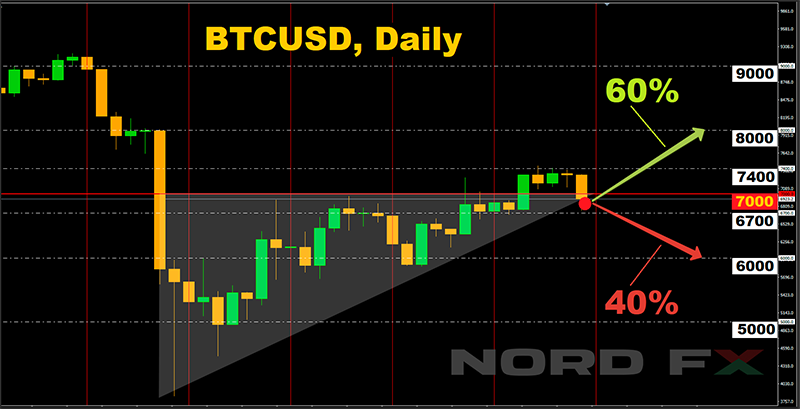
The forecasts of the surveyed experts at the moment look rather timid and modest. According to 65% of them, the BTC/USD pair can reach the $6,000-6,500 zone next week. The remaining 45% can see it around $5,000.
But further on the situation for the bulls looks somewhat worse. Only 20% of experts believe that Bitcoin will be able to confidently gain a foothold above $7,000 by the end of March, and another 20% predict the coin will fall to the $3,000-3,500 zone. The remaining 60% are in no hurry to give any forecasts at all.
NordFX Analytical Group
Notice: These materials should not be deemed a recommendation for investment or guidance for working on financial markets: they are for informative purposes only. Trading on financial markets is risky and can lead to a loss of money deposited.
#eurusd #gbpusd #usdjpy #usdchf #forex #forex_example #signals #forex #cryptocurrencies #bitcoin
https://nordfx.com/
- EUR/USD. The struggle of governments and regulators for the economies of their countries continues. The ECB did not cut interest rates but announced a 60% increase in the quantitative easing (QE) program, which will amount to €120 billion in 2019. For its part, the US Federal reserve is flooding the market with cheap money, under pressure from President Trump who is eager to be re-elected for the second term. The US has launched a short-term lending program since last week, under which the Fed is ready to lend $1.42 trillion to banks every week. This has never happened in the history of the United States. This week, banks have already received the first tranche at 0.255% per annum. This suggests that, with a high probability, the rate on the dollar will be reduced by at least 0.50% at the Fed meeting next week.
This balance of power is not in favor of the dollar. However, a small margin (55%) is still on the side of bears among the experts, they are supported by 85% of oscillators and trend indicators on H4. The remaining 45% of analysts believe that the dollar will still lose its position, and the pair will again go north. This is agreed by 15% of oscillators on H4, which give signals about the pair being oversold.
Graphical analysis on H4 shows a sharp decline in the pair to the level of 1.0950, and then its growth first to the height of 1.1100, and then 100 points higher.
However, with the ongoing coronavirus panic, super-turbulence in the stock and currency markets, and surging oil prices, any forecasts can turn to dust in a second. And this is proved by the chaos that reigns in the indicator readings on D1, where the green, red and gray colors are mixed.
The main support zones are 1.1065, 1.1000, 1.0850 and the February low 1.0750. The resistance zones – 1.1175, 1.1240, 1.1350 and 1.1500;
- GBP/USD. It is clear that 100% of the trend indicators at the end of the weekly session are looking down. However, the situation is somewhat different among oscillators – 20% of them on the H4 timeframe and 15% on D1 are already in the oversold zone, which indicates an imminent correction or reversal of the trend up. Graphical analysis on D1 supports this development as well. According to its readings, the pair can reach the bottom near the October 2019 low of 1.2200, and then turn around and go north – first to the resistance of 1.2425, and then to the height of 1.2565. At the same time, given the range of fluctuations in recent weeks, it makes sense to designate two more support levels – 1.2065 and 1.1960, and two resistance levels – 1.2725 and 1.2870. Although, perhaps, this is not the limit.
As for the opinions of experts, it was not possible to form one for the upcoming week. But in the forecast for the next 1-2 months, the number of supporters of the pair's growth is a clear majority-75%, the goal is to rise to the level of 1.2900-1.3100;
- USD/JPY. If in the medium-term forecast for GBP/USD, most analysts voted for the growth of the pound and the fall of the dollar, the situation is the opposite with respect to the yen. Here, 60-70% of experts believe that in the next 1-2 months, the Japanese currency will lose its position, the pair will pass through the 108.30-109.75 zone like a knife through butter and reach the 112.00-112.40 level. The next target for the bulls is 200 points higher.
Note that in the coming week, in addition to the US Federal Reserve's decision on the interest rate, we are waiting for similar decisions by the Bank of Japan on Thursday March 19 and the People's Bank of China on Friday March 20. Both of these regulators announced their intention to support commercial banks and companies in their countries. And if fluctuations in yuan rates do not surprise the market, a reduction in the yen rate will be a big surprise for investors.
If, when the dollar rate is lowered, the yen rate remains at the same negative level of -0.1%, it is possible that the scales will tilt in favor of the Japanese currency, and the USD/JPY pair will go down again, breaking through the supports of 105.90, 104.50 and 103.15 one after another. The bears' goal is to return to last week's low and try to test the 101.00 level.
And, of course, it will be necessary to closely monitor the current yield on 10-year US Treasury bonds and oil prices, which largely determine the Japanese yen quotes;
– cryptocurrencies. "What was that?"- many traders and investors ask themselves, looking back at the events of the past week. Was it the beginning of the end? Or a game of big speculators, after which Bitcoin will more than recoup all losses? Or, perhaps, people just did not fully believe in a bright crypto future, and in a critical situation related to the coronavirus, they simply preferred to get rid of virtual wealth, exchanging it for time-tested, quite tangible dollars.
The forecasts of the surveyed experts at the moment look rather timid and modest. According to 65% of them, the BTC/USD pair can reach the $6,000-6,500 zone next week. The remaining 45% can see it around $5,000.
But further on the situation for the bulls looks somewhat worse. Only 20% of experts believe that Bitcoin will be able to confidently gain a foothold above $7,000 by the end of March, and another 20% predict the coin will fall to the $3,000-3,500 zone. The remaining 60% are in no hurry to give any forecasts at all.
NordFX Analytical Group
Notice: These materials should not be deemed a recommendation for investment or guidance for working on financial markets: they are for informative purposes only. Trading on financial markets is risky and can lead to a loss of money deposited.
#eurusd #gbpusd #usdjpy #usdchf #forex #forex_example #signals #forex #cryptocurrencies #bitcoin
https://nordfx.com/