

Date: 14th July 2026.
Oil Prices Jump: How US-Iran Tensions Could Impact Traders.

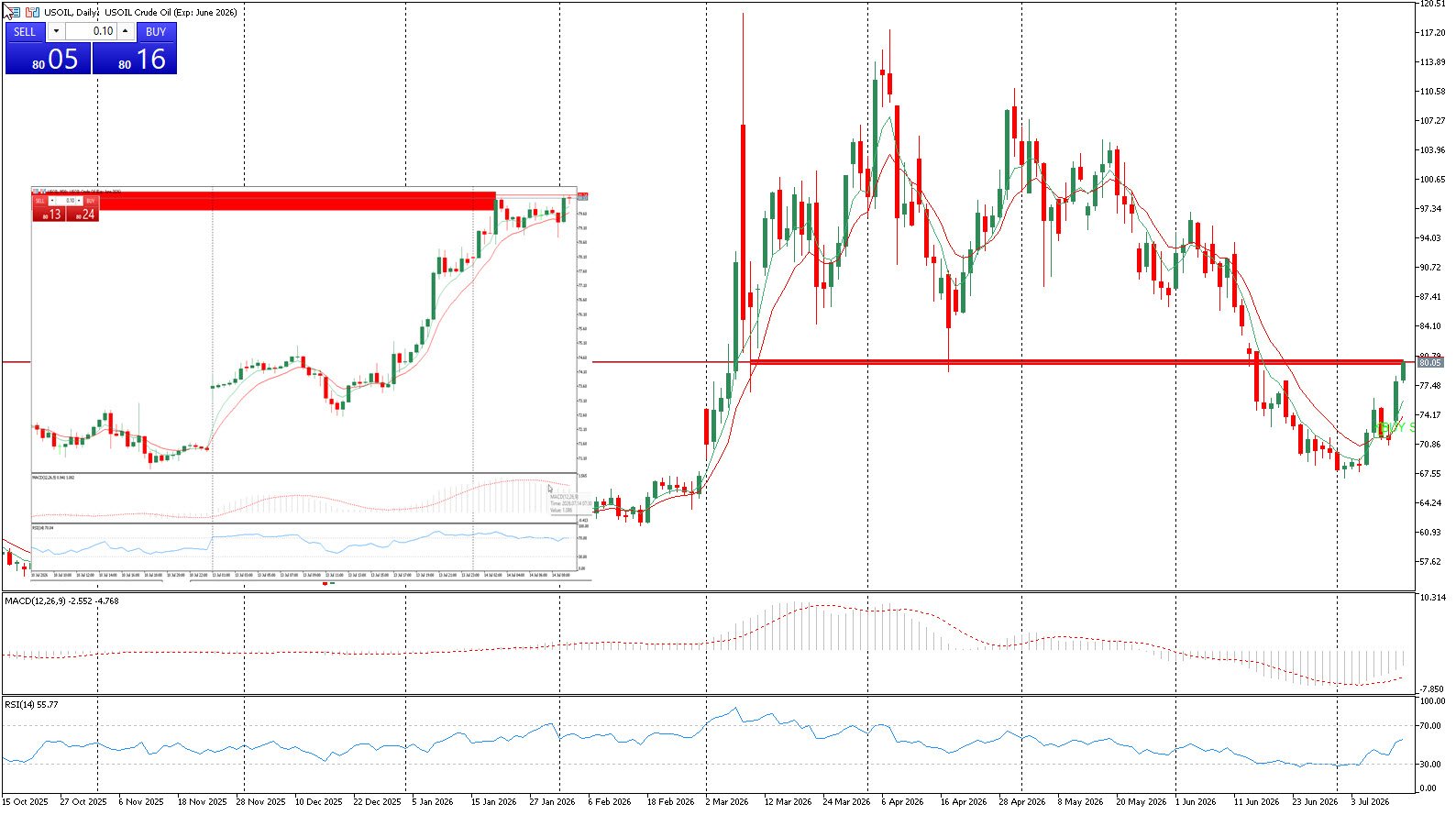
Oil prices are back in focus after escalating US-Iran tensions reignited concerns over global energy supplies and inflation. Brent crude climbed above $85 per barrel, extending gains for a second consecutive session as markets reacted to renewed uncertainty surrounding the Strait of Hormuz.
At the same time, investors are preparing for key US inflation data, fresh comments from the Federal Reserve, and the start of the second-quarter earnings season. Together, these events could shape the direction of oil, gold, currencies, and stock markets over the coming days.
For traders, this combination of geopolitical risk and macroeconomic data could create significant trading opportunities, but also increased volatility.
The Strait of Hormuz is one of the world’s most important energy corridors, with around one-fifth of global oil supplies passing through it. Even the possibility of supply interruptions is enough to push oil prices higher as traders price in additional geopolitical risk.
While no major supply shortages have been confirmed, uncertainty alone has been sufficient to support crude prices and increase volatility across global financial markets.
Any disruption to this shipping lane can have widespread consequences, including:
As fuel and transportation costs rise, businesses often face higher operating expenses, which can eventually filter through to consumer prices. This is why oil is closely watched by central banks when assessing inflation risks.
The latest increase in crude prices has already prompted markets to increase expectations that the Federal Reserve could tighten monetary policy further if inflation remains stubbornly high.
That shift has pushed Treasury yields higher while adding pressure to growth-oriented assets such as technology stocks.
Three scenarios could shape market sentiment:
Inflation Is Higher Than Expected
Higher interest rates generally strengthen the US Dollar while increasing borrowing costs for businesses and consumers. They also tend to weigh on growth sectors, particularly technology companies whose valuations depend heavily on future earnings.
For traders, changes in interest rate expectations often generate volatility across forex, indices, commodities, and bond markets.
Technology Stocks Face Fresh Pressure
Artificial intelligence has been one of the biggest themes driving equity markets this year, but investors are becoming more selective. Recent weakness in semiconductor shares highlighted growing concerns that some AI-related valuations may have become stretched. Higher bond yields and rising interest rate expectations add further pressure because they reduce the present value of future earnings, making growth companies more vulnerable during tightening cycles.
This could lead to larger price swings in the NASDAQ 100 and semiconductor stocks as earnings season begins.
If tensions in the Middle East continue to escalate, safe-haven buying could provide ongoing support for gold even if expectations for tighter monetary policy remain elevated.
A stronger-than-expected inflation report alongside sustained gains in oil prices could reinforce expectations of tighter monetary policy, affecting currencies, commodities, and global equity indices simultaneously.
Maintaining disciplined risk management, appropriate position sizing, and clearly defined trading plans becomes especially important during periods of heightened uncertainty.
For traders, the days ahead could bring significant opportunities across oil, gold, currencies, and stock indices. However, the combination of geopolitical developments and major economic releases also increases the potential for sharp price swings.
Staying informed, monitoring key economic events, and managing risk carefully will be essential as markets navigate one of the most eventful weeks of the quarter.
Always trade with strict risk management. Your capital is the single most important aspect of your trading business.
Please note that times displayed based on local time zone and are from time of writing this report.
Click HERE to access the full HFM Economic calendar.
Want to learn to trade and analyse the markets? Join our webinars and get analysis and trading ideas combined with better understanding of how markets work. Click HERE to register for FREE!
Click HERE to READ more Market news.
Oil Prices Jump: How US-Iran Tensions Could Impact Traders.
Oil prices are back in focus after escalating US-Iran tensions reignited concerns over global energy supplies and inflation. Brent crude climbed above $85 per barrel, extending gains for a second consecutive session as markets reacted to renewed uncertainty surrounding the Strait of Hormuz.
At the same time, investors are preparing for key US inflation data, fresh comments from the Federal Reserve, and the start of the second-quarter earnings season. Together, these events could shape the direction of oil, gold, currencies, and stock markets over the coming days.
For traders, this combination of geopolitical risk and macroeconomic data could create significant trading opportunities, but also increased volatility.
Why Are Oil Prices Rising?
The latest rally follows renewed tensions between the United States and Iran, with concerns that shipping through the Strait of Hormuz could once again face disruption.The Strait of Hormuz is one of the world’s most important energy corridors, with around one-fifth of global oil supplies passing through it. Even the possibility of supply interruptions is enough to push oil prices higher as traders price in additional geopolitical risk.
While no major supply shortages have been confirmed, uncertainty alone has been sufficient to support crude prices and increase volatility across global financial markets.
Why the Strait of Hormuz Matters
The Strait of Hormuz connects the Persian Gulf with the Arabian Sea and serves as a critical route for oil exports from several major producing nations.Any disruption to this shipping lane can have widespread consequences, including:
- Higher crude oil prices.
- Increased transportation and shipping costs.
- Rising inflationary pressures.
- Greater uncertainty across global financial markets.
Rising Oil Prices Could Fuel Inflation Again
Higher oil prices don’t just affect the energy sector, they can influence the broader economy.As fuel and transportation costs rise, businesses often face higher operating expenses, which can eventually filter through to consumer prices. This is why oil is closely watched by central banks when assessing inflation risks.
The latest increase in crude prices has already prompted markets to increase expectations that the Federal Reserve could tighten monetary policy further if inflation remains stubbornly high.
That shift has pushed Treasury yields higher while adding pressure to growth-oriented assets such as technology stocks.
US Inflation Data Could Be the Next Major Market Catalyst
Attention now turns to the latest US Consumer Price Index (CPI) report. Economists expect inflation to cool modestly compared with the previous month, but markets remain highly sensitive to any surprise.Three scenarios could shape market sentiment:
Inflation Is Higher Than Expected
- Expectations for another Federal Reserve rate hike increase.
- Treasury yields may continue climbing.
- The US Dollar could strengthen.
- Technology stocks and major equity indices may come under additional pressure.
- Oil could remain supported if inflation concerns intensify.
- Market attention is likely to remain focused on geopolitical developments.
- Oil prices and Federal Reserve commentary may continue driving sentiment.
- Pressure on the Federal Reserve may ease.
- Treasury yields could decline.
- Equities may recover.
- Gold could benefit from improved risk sentiment and lower yields.
Federal Reserve Expectations Are Shifting
Markets have become increasingly convinced that another interest rate increase remains a possibility. Recent comments from Federal Reserve officials have reinforced the view that policymakers may need to keep borrowing costs elevated if inflation proves more persistent than expected.Higher interest rates generally strengthen the US Dollar while increasing borrowing costs for businesses and consumers. They also tend to weigh on growth sectors, particularly technology companies whose valuations depend heavily on future earnings.
For traders, changes in interest rate expectations often generate volatility across forex, indices, commodities, and bond markets.
Technology Stocks Face Fresh Pressure
Artificial intelligence has been one of the biggest themes driving equity markets this year, but investors are becoming more selective. Recent weakness in semiconductor shares highlighted growing concerns that some AI-related valuations may have become stretched. Higher bond yields and rising interest rate expectations add further pressure because they reduce the present value of future earnings, making growth companies more vulnerable during tightening cycles.
This could lead to larger price swings in the NASDAQ 100 and semiconductor stocks as earnings season begins.
Gold Returns as a Safe-Haven Asset
Gold rebounded after two consecutive days of losses as investors balanced two competing forces. On one hand, higher interest rates usually reduce the appeal of non-yielding assets such as gold. On the other hand, geopolitical uncertainty often boosts demand for safe-haven investments.If tensions in the Middle East continue to escalate, safe-haven buying could provide ongoing support for gold even if expectations for tighter monetary policy remain elevated.
Markets Traders Should Watch This Week
Several key markets are likely to remain particularly sensitive in the coming days:- Brent Crude and WTI Oil - vulnerable to further geopolitical developments.
- US Dollar Index (DXY) - driven by inflation expectations and Federal Reserve policy.
- Gold – balancing safe-haven demand against higher bond yields.
- US Treasury Yields - especially the 2-year note, which closely reflects interest rate expectations.
- NASDAQ 100 and Semiconductor Stocks - sensitive to both earnings results and interest rate expectations.
- Energy Stocks - could continue benefiting if crude oil remains elevated.
Risk Management During High Volatility
This week combines several powerful market catalysts:- Escalating US-Iran tensions.
- Higher oil prices.
- US Consumer Price Index (CPI) data.
- Federal Reserve commentary.
- The beginning of earnings season.
A stronger-than-expected inflation report alongside sustained gains in oil prices could reinforce expectations of tighter monetary policy, affecting currencies, commodities, and global equity indices simultaneously.
Maintaining disciplined risk management, appropriate position sizing, and clearly defined trading plans becomes especially important during periods of heightened uncertainty.
Bottom Line
Escalating US-Iran tensions have once again placed oil markets at the centre of global investor attention. Brent crude has climbed above $85 per barrel, reviving concerns about inflation just as traders prepare for crucial US CPI data, Federal Reserve guidance, and the start of earnings season.For traders, the days ahead could bring significant opportunities across oil, gold, currencies, and stock indices. However, the combination of geopolitical developments and major economic releases also increases the potential for sharp price swings.
Staying informed, monitoring key economic events, and managing risk carefully will be essential as markets navigate one of the most eventful weeks of the quarter.
Always trade with strict risk management. Your capital is the single most important aspect of your trading business.
Please note that times displayed based on local time zone and are from time of writing this report.
Click HERE to access the full HFM Economic calendar.
Want to learn to trade and analyse the markets? Join our webinars and get analysis and trading ideas combined with better understanding of how markets work. Click HERE to register for FREE!
Click HERE to READ more Market news.


